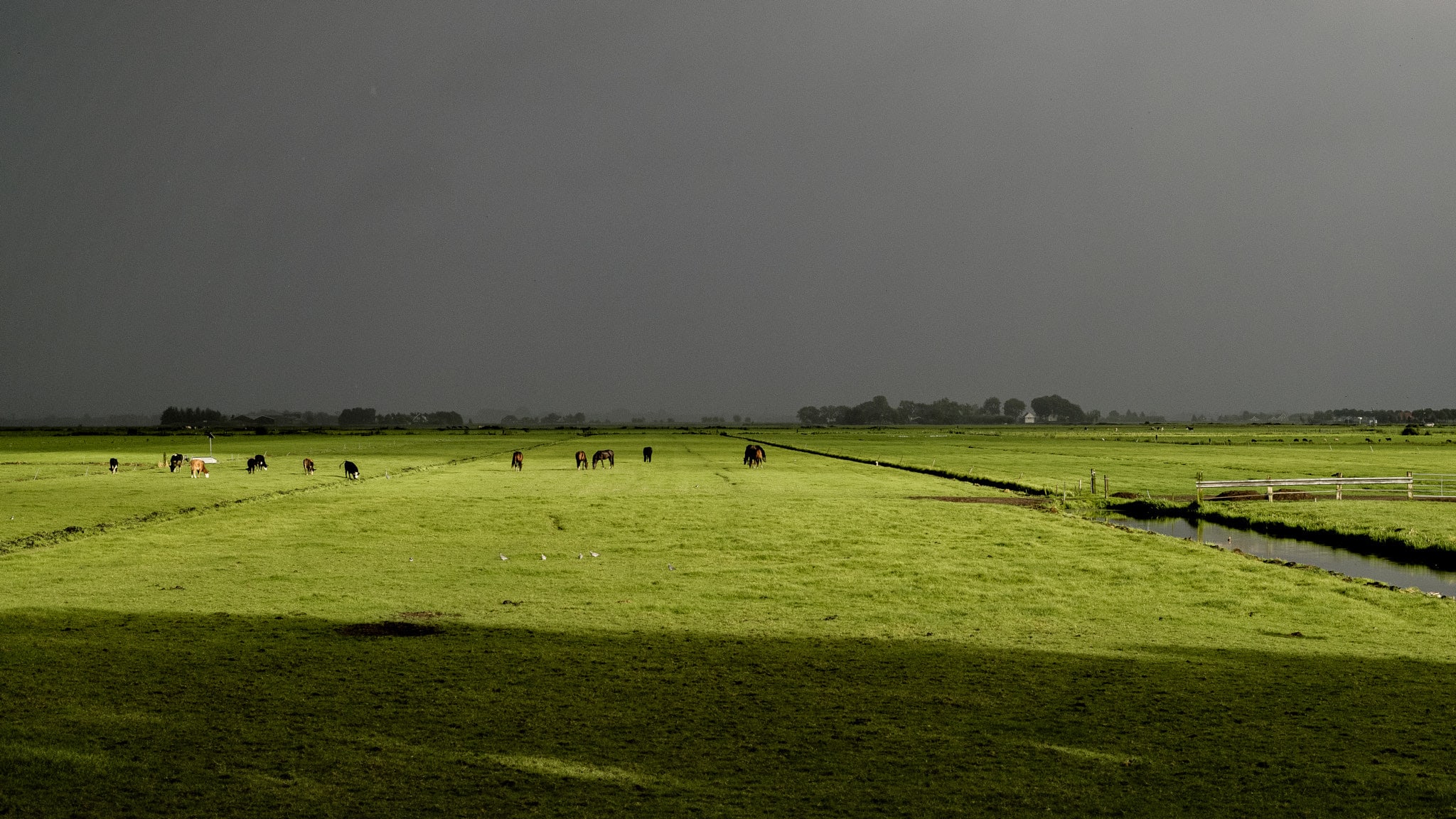
Southwest Virginia has the research, the land, the people and the companies to lead the future of agricultural technology in the US.
All that’s left is a place to let it grow.
The Problem
American farms are working against a shrinking labor force, volatile input costs and productivity that has effectively stopped growing. What answers that already exists: robots that thin and weed a row, sensors that meter water an acre at a time, microbes that do part of the work of fertilizer.
For example, one study tracked 560 genetic improvements developed in the laboratory. Yet only five of them reached a farm. What stops the rest is money, and where it lands.
Public agricultural research funding is a third below its 2002 peak. Private capital left the sector after 2021, and what remains concentrates in a few metropolitan areas. The regions holding the land, the producers and the research capacity receive almost none of it.
Southwest Virginia is where the next round of that investment would do the most work.
Public agricultural R&D
Federal and state spending on agricultural and food research, billions of constant 2022 dollars.
USDA Economic Research Service, agricultural and food R&D expenditures. The series ends in 2021, the last year ERS reports complete public spending.
A research university, working farms, a hardware base and a cluster of labs, all within an hour.
Agricultural technology needs four things: researchers, working farmland, people who can build hardware, and laboratory equipment. Assembling those four where they do not already exist takes a generation. Here they sit along sixty miles of Interstate 81 between Pulaski and Roanoke. Two of the three clusters on that road are built: autonomy and sensing in Blacksburg, biomedical in Roanoke. The agricultural one is not.
Blacksburg
Autonomy, sensing and software
Virginia Tech, and the unmanned systems and sensing base built here on federal research.
Roanoke
Biomedical
RoVa Labs, a $26 million shared wet lab opened in May 2026, alongside the Fralin Biomedical Research Institute.
Pulaski(The missing cluster)
Agricultural technology
Agricultural technology companies, and the farmland around them.
Furthermore, Southwest Virginia offers:
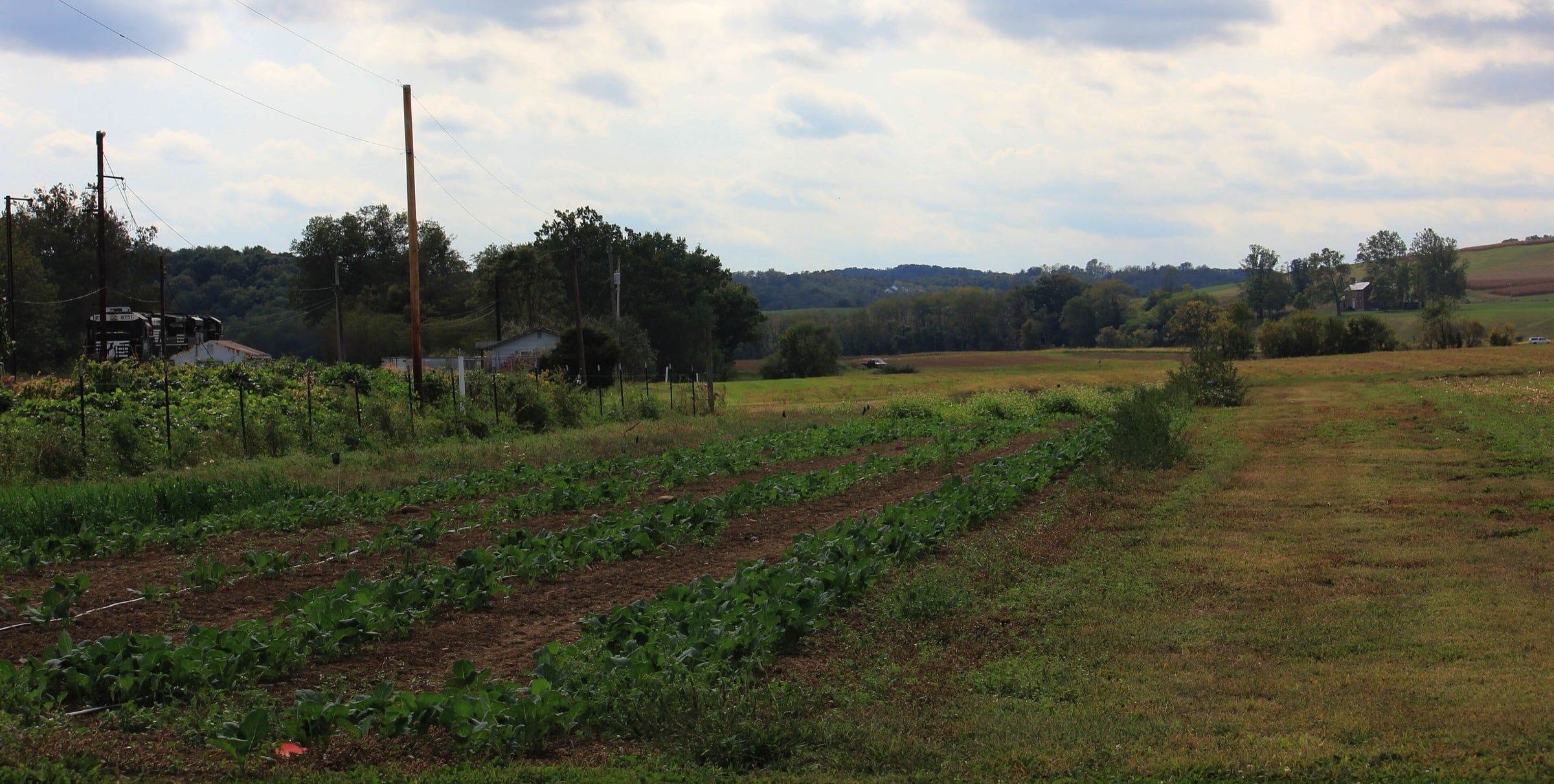
Land under production
Crops, livestock, poultry and forestry all run year round on the same ground, in the Commonwealth's largest private industry.
A manufacturing base that builds the hardware
The federal technology hubs program funded an advanced manufacturing strategy based in these counties, chosen from 181 applications.
Interstates 81 and 77
Four hours from Washington: close enough for federal engagement, far enough for an operating cost structure that works.
Room to absorb growth
Space, housing and land a company can still afford, which the big metro areas no longer have.
That manufacturing strategy and the life sciences cluster Roanoke built around Virginia Tech Carilion and Carilion Clinic already run on what agricultural technology needs: robotics, sensing, advanced materials, biotechnology, data, and people who have taken a technology from a laboratory to a market.
An agricultural technology cluster ties those efforts into one growth hub, and turns research into companies, investment and skilled work in Virginia. Three pieces on sixty miles of road, and the hub is a few years out rather than a generation.
All of it within 25 miles of Virginia Tech, and a day’s drive from half the United States population.
Virginia Tech's national rank in industrial and manufacturing engineering.
Virginia Tech's national rank for agricultural sciences.
Annual economic impact of agriculture in Virginia, the Commonwealth's largest private industry.
Acres of Virginia Tech research farm on the New River, twenty minutes from Pulaski.
The money that would pay for this went somewhere else.
Public research funding fell by a third. Private capital went to the Bay Area.
Public agricultural research peaked at $7.64 billion in 2002 and fell to $5.16 billion by 2019, on work that returns about twenty dollars for every dollar spent. Private agtech funding grew twentyfold to 2021, then fell about thirty percent.
The easy investments were made first, in software, sensing and mapping. What is left is deep technology: long biological and seasonal validation, hardware and biology that have to scale physically, and adoption risk carried on a working farm.
For agricultural technology companies, raising the first two or three million dollars, before there is any revenue, is one of the biggest challenges anywhere, and it is harder in rural areas, where there is less access to capital and fewer investors. Many companies reach that point with a working prototype and not enough funding to keep operating long enough to test the product, win customers and prove the business works.
Federal money is not new to this region. It built Virginia Tech as a land grant university, the experiment stations attached to it, and the county agents who carry research out to farms. What has never reached here is money at the stage when a company either grows or shuts down.
Returned to the economy for every dollar of public agricultural research since 1900.
Share of all United States venture capital deal value that went to artificial intelligence companies in 2025.
Share of all United States startup capital raised in the Bay Area in 2025.
Average annual private capital reaching every micropolitan area in the country put together: the small cities outside the metros, and the counties around them.
Companies here are already doing the work, with nowhere to run it.
The companies are already here. The facilities are not.
Agricultural technology companies are already working across the region. Three of them, in Pulaski and Montgomery counties. None are waiting on a breakthrough, yet none could find a sustained research and development location, built to support ongoing multi year work. Instead, a closed elementary school is standing in for a research facility.

MOVA builds advanced filtration systems that remove ammonia from poultry house air, creating a healthier environment for birds and improving flock performance. The captured ammonia is recovered as a valuable nitrogen resource that can be sold, and kept out of the Chesapeake watershed it would otherwise reach.
Serial entrepreneur Steve Critchfield founded the company in Pulaski, where he had already built and sold the telecommunications business Tele-Works Inc. Proof of concept testing ran through Virginia Tech's Advanced Propulsion and Power Laboratory, twenty five miles up the road, and it has run research and development inside the Jefferson School in Pulaski.
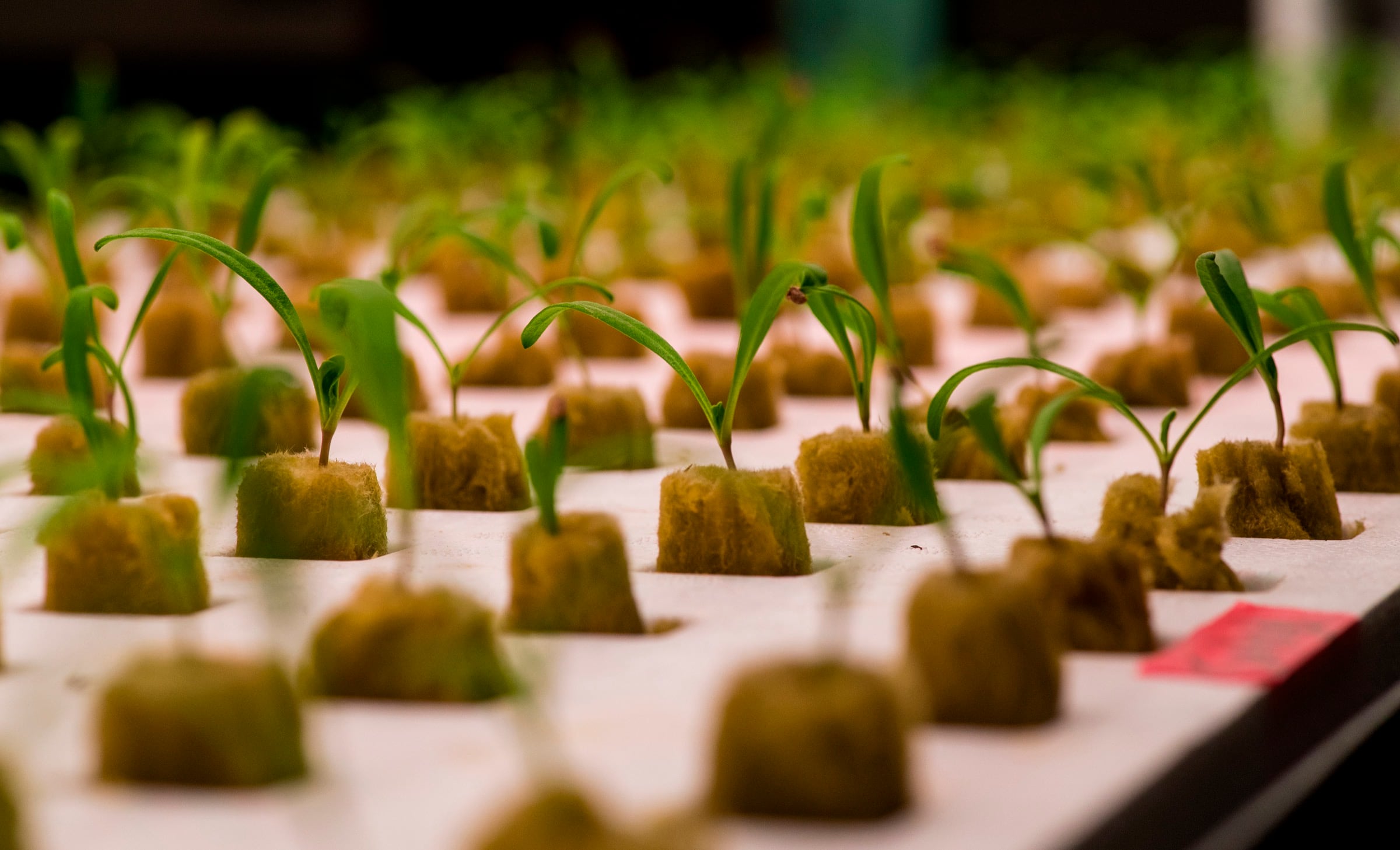
Pod Farms builds the racks. Its vertical channel system stands nutrient film technique upright so a room grows in three dimensions with no transplanting step. Toni Sperry founded the company in 2017 and is its chief executive.
Its pilots run in a greenhouse in Wilson, North Carolina and an aquaponics facility in Warsaw, Virginia, and it has run research and development inside the Jefferson School in Pulaski. A growing system is only proved by running it in a commercial operation through a full crop cycle, and no site in the region is set up to host one.
Vegg converts closed public buildings into growing space a company can lease, using historic tax credits to hold the rent under what a new build would cost.
Its first site is the Jefferson School, a shuttered Pulaski elementary school of thirty to forty thousand square feet, acquired and under historic restoration. Classrooms take trial crops, the auditorium takes production, and in April 2024 it harvested lettuce grown on carbon dioxide captured by MOVA.
Square feet, at the top of its range, in the Jefferson School.
Classrooms for trial crops, the auditorium for production.
25
Miles from the Pulaski school to Virginia Tech's manufacturing engineering department.
North Carolina has already done this.
Concentrating research investment in one region already worked, in a state that had far less to start with.
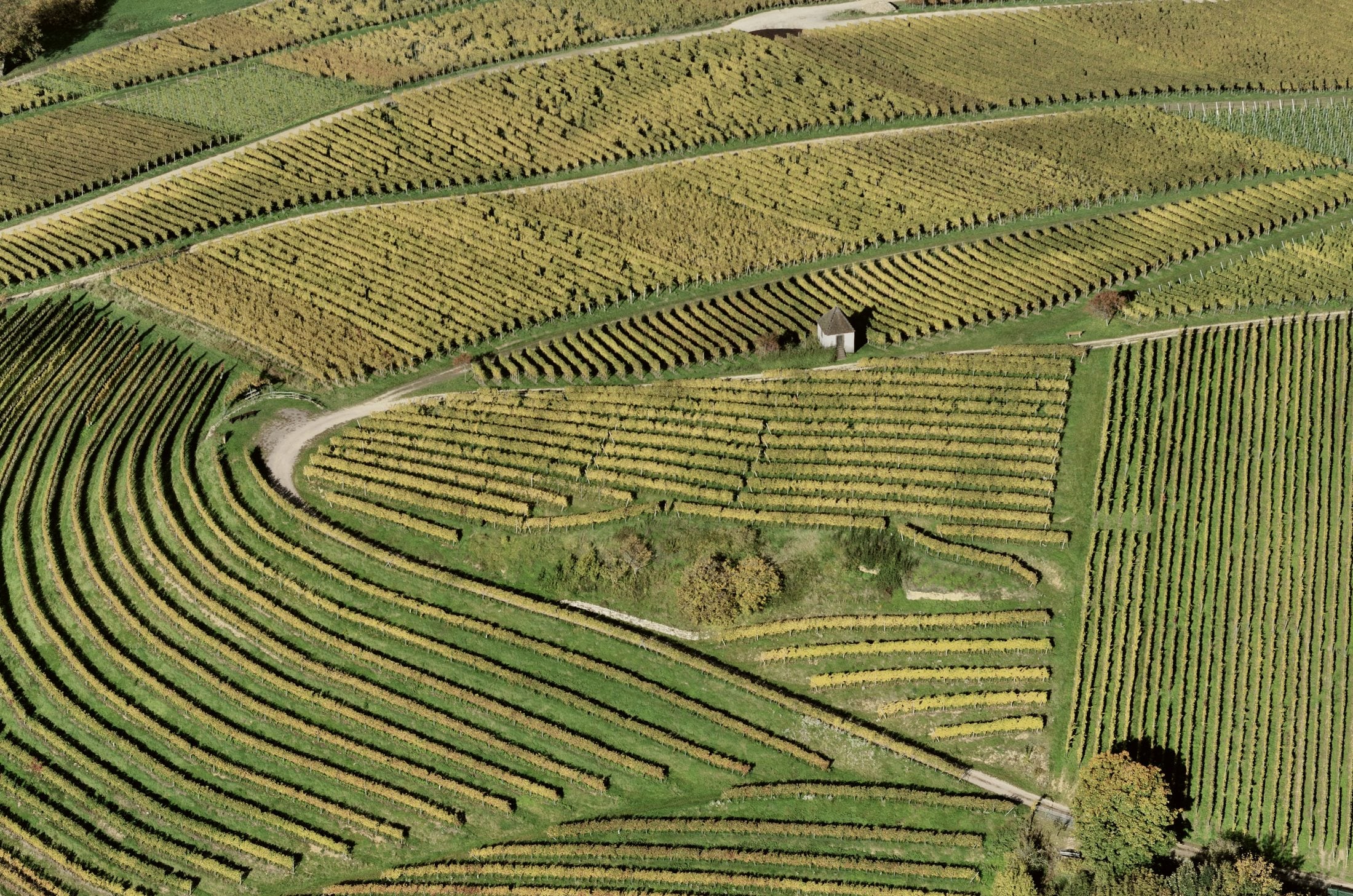
Research Triangle Park is a research campus in North Carolina, built on pine forest between three universities in 1959. Today it holds nearly 400 companies and 55,000 jobs across 7,000 acres, and produces 4.1 percent of the state economy. The region around it has passed 2.2 million people and anchors commitments like Biogen’s $2 billion and Novartis Gene Therapies’ $771 million expansion with 700 jobs.
North Carolina was not a promising place to try it. The state ranked 47th of 48 in per capita income, ran on tobacco, textiles and furniture, and watched its graduates leave. What it had was three research universities close together, land nobody was using, and a decision to concentrate investment in one region instead of spreading it across the state.
That is the same list Southwest Virginia can put on the table now. Universities close together, land that is not doing anything else, and a region small enough that investment stays in one place instead of spreading thin.
Two things are further along here than they were there. North Carolina had no companies waiting when the decision was made and had to attract them; the companies are already working here. And the park needed twenty years before anyone could point at a result, because everything in it had to be built. Here it is mostly built.
Closing the gap takes testbeds, demonstration farms and shared pilot facilities, funded for years.
A shared facility of exactly this kind already exists forty minutes away. RoVa Labs opened in Roanoke in May 2026: 40,000 square feet of shared wet lab, $26 million from Carilion Clinic, the city and Virginia Tech, expected to carry 250 jobs within five years.
Agriculture has nothing like it here. The nearest thing is the Jefferson School in Pulaski, which the three companies pay for themselves.
01
Multi season testbeds
Land and equipment where a technology can be tried across more than one growing season, because one season proves nothing.
02
Demonstration farms
Working operations where producers can watch a tool run under real conditions before risking a crop on it.
03
Shared pilot facilities
Fabrication, sensing and laboratory capacity too expensive for any one early company to build alone. RoVa Labs is what one looks like when it is funded.
04
Public money that shares the risk
Public funding that covers enough of the early risk that private investors will put money in beside it.
05
Accelerators and incubators
Programs that support a team from prototype through the years of testing that private investors will not wait out.
The ask
Any one of these, built here.

Funding one facility here buys what other regions would spend a generation assembling.